The Wave That Slowed the Traffic: Inside the Village Speedwatch Crew With a Flask in One Hand
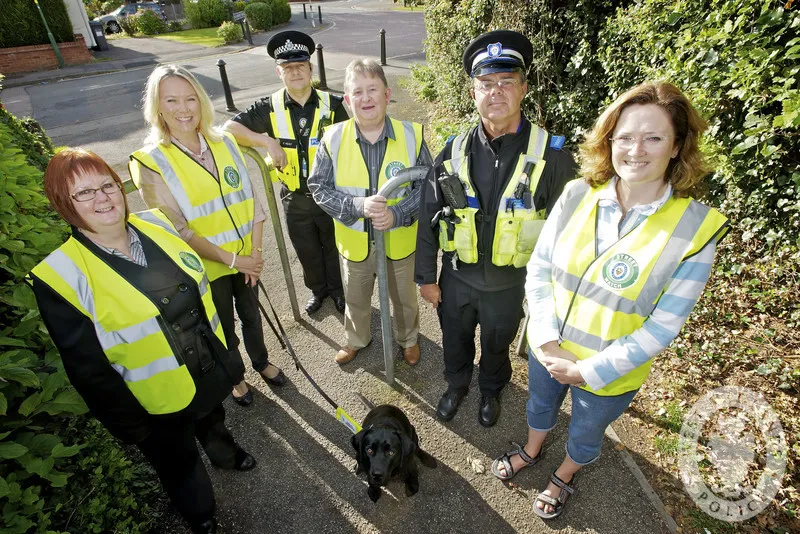
Photo: West Midlands Police from West Midlands, United Kingdom, CC BY-SA 2.0, via Wikimedia Commons
The first thing you notice is not the speed gun. It is the flask.
It sits on a folding camping table beside a clipboard, a packet of custard creams and a laminated sign that says please slow down. The second thing you notice is the waving. Every car that comes round the bend gets a smile and a raised hand, as if the driver has just arrived at a very low-key party. Most of them slow down. A few wave back. One van driver gives a thumbs-up and then, slightly guiltily, checks his speed.
This is a Community Speedwatch session in a village that would rather not be named, mostly because the volunteers are too polite to make a fuss. They have been meeting on Thursday mornings for a few months now, ever since a spate of near-misses on the main road turned a vague worry into a regular appointment. The worry was simple: too many cars, too much speed, too many children walking to school along a stretch with no proper pavement.
The response could have been angry. It could have been a petition, a Facebook group full of capital letters, or a stern letter to the council. Instead, it became a flask-and-hi-vis operation with a surprisingly social side.
The clipboard is almost an afterthought
Community Speedwatch is not a vigilante outfit. Volunteers are trained, insured and kitted out through the local police scheme. They record speeds and pass the details on. They do not stop cars, lecture drivers or chase anyone down the lane with a rolling pin. The point is data, awareness and a visible reminder that this is a place where people live.
But the volunteers here have added something the leaflet does not mention: friendliness.
'You can stand here like a traffic cone and people just ignore you,' says one of the volunteers, a retired teacher who has lived in the village for thirty years. 'Or you can say good morning and mean it. The second one works better. Nobody wants to be the person who speeds past the nice lady with the biscuits.'
That is not a scientific finding, admittedly. But it is hard to argue with the anecdotal evidence. On the morning I visit, a hatchback comes through at a speed that suggests the driver is late for something important. Then the driver spots the hi-vis trio, lifts a hand in apology and eases off. A few minutes later, a delivery van slows almost to a crawl and the driver leans out to ask if they want a cup of tea. They already have one. He looks disappointed.
A roadside social club with a serious job
The sessions have become a small fixture of village life. Dog walkers stop for a chat. Parents on the school run give a wave. A man on a bicycle pulls over to report that the grit bin at the crossroads is broken, as if the Speedwatch team is also the local switchboard. They take that as a compliment.
There is a rota, a WhatsApp group and a shared calendar. There is also a biscuit tin with a strict hierarchy: custard creams at the top, rich tea at the bottom, and a mysterious packet of pink wafers that nobody claims to have bought. The flask is filled at 7.45am. The first car is usually logged at 8.10am. By 9am, the team has recorded a handful of speeds, had three conversations and learned that the post office is getting a new noticeboard.
It is, in other words, exactly the kind of thing that makes a village feel like a village. The speed gun is the excuse. The chat is the point.
That is not to say the data does not matter. The volunteers are careful. They log the time, the direction and the speed. Anything significant goes to the police. They are not there to shame individuals. They are there to build a picture, and to remind drivers that the road is not a racetrack between one junction and the next.
Why a wave beats a wagging finger
There is a particular kind of British anger that expresses itself through a firmly worded notice on a lamppost. It rarely changes behaviour. A wave is different. It is a tiny moment of human contact. It says: I see you, I live here, and I would rather you did not hit my neighbour.
Psychologists would probably call it something clever about social norms and accountability. The volunteers call it common sense. When people feel connected to a place, they tend to behave better in it. When they feel anonymous, they speed up. A hi-vis jacket and a friendly hand can puncture that anonymity in about three seconds.
It also helps that the volunteers are not trying to win an argument. They are not standing in the road, blocking traffic or filming people for social media. They are at the kerb, in plain sight, with a flask and a clipboard. The message is firm but not hostile. Slow down. Good morning. Have a nice day.
Could your street do it?
Possibly. But it is not as simple as buying a hi-vis vest and standing near a bend. Community Speedwatch schemes are run through local police forces, with training, risk assessments and rules about where volunteers can operate. You need a coordinator, a few committed people and a willingness to be boring about procedure. You also need to accept that some drivers will ignore you entirely, and that the weather will be reliably awful.
The villages that make it work tend to share a few things: a parish council that supports them, a police contact who answers emails, and a core group of people who quite like standing outdoors with a cup of tea. The kit matters less than the kettle. The speed gun is useful. The custard creams are essential.
And there is a quieter benefit that nobody puts on the recruitment poster. Speedwatch gives people a reason to be outside, to talk to neighbours and to feel useful. It turns a worry into a weekly appointment. It turns a complaint into a conversation. It turns a stranger in a hi-vis jacket into someone you wave at on the school run.
Round here, the traffic has not vanished. The village has not become a utopia of perfectly behaved drivers. But the road feels a little slower, and the morning feels a little friendlier. The flask is still on the table. The wave is still going out. And the custard creams, somehow, are already gone.