The Street Where December Comes One Window at a Time
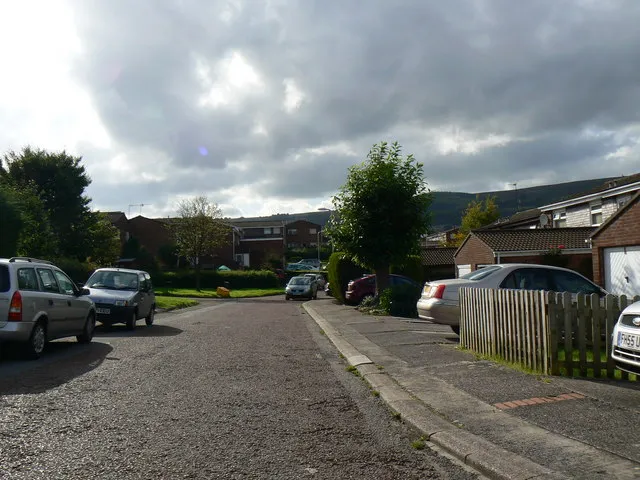
Photo: Colin Madge, CC BY-SA 2.0, via Wikimedia Commons
December is a month that asks a lot of us. It asks for lists, for receipts, for an outfit that can survive a school nativity and a works do in the same week. On one ordinary street in a Midlands town, it asks for something much simpler: a window, a switch, and a willingness to stand outside in the cold for ten minutes.
Every evening in December, a different household on the road lights up one front window. Not the whole house, not a laser show, just a window. Neighbours follow a hand-drawn map that gets pushed through letterboxes at the end of November. They turn up with flasks, dogs on leads, children in pyjamas under coats, and the sort of biscuits that come in a big tub and never quite get finished. The map says which house to look at on which night. The street does the rest.
It began with one angel and a nosy neighbour
The trail started in 2019, when one resident put a lit angel in her front room and left it there for the whole of December. A neighbour stopped to admire it, then asked the question that started everything: are you doing that again tomorrow? One window became two. Two became a street. By the following year, someone had drawn a map on the back of a takeaway leaflet and photocopied it at the library. It has been running ever since, with the same low-key rules and the same refusal to make it complicated.
There is no committee, no group chat demanding daily updates, and no rota that makes anyone feel guilty. If you want to take part, you put your name on the map. If you don’t, nobody knocks on your door. Some years there are twenty-four windows. Some years there are eighteen. The trail bends around real life.
The rules are almost embarrassingly simple
One house, one night. Lights on from about six until nine. Keep it visible from the pavement. Don’t spend money you haven’t got. That’s it. There is no prize for the best window and no leaderboard for the most ambitious. A single candle in a jam jar counts. So does a child’s drawing of a robin taped to the glass. One year, a household hung a string of battered fairy lights around a houseplant and called it a forest. It was one of the most visited windows on the map.
The cost is genuinely tiny. Most people use decorations they already own. The map is printed at the library or on the office printer when nobody is looking. The electricity for one window for a few hours is not going to make anyone rethink their energy bill. The real currency is a bit of pride and a willingness to be looked at. That can be a big ask. Standing in your front room while a small crowd admires your tinsel is oddly exposing. But it is also, according to everyone who has done it, quite lovely.
The flask is not optional
On a good night, the pavement outside the window of the day turns into a tiny, temporary gathering. Someone brings a flask. Someone else brings a bag of those chocolate coins that taste better than they should. The children run ahead to check the next house on the map, even though they know it is not due until tomorrow. Older neighbours arrive on the arm of a friend or a grandchild. Nobody is in charge. The window does the work.
The trail has also become a way of marking time. You know December is moving on because the map is getting shorter. You know it is nearly Christmas when the final windows appear. It is a calendar you can walk through, one front room at a time.
Why the darkest month feels lighter
Advent can feel like a countdown to a finish line. This turns it into a moving party. You don’t have to host. You don’t have to buy a ticket. You just have to walk a few doors down and say hello. The trail gives people a reason to be out after dark, which is not nothing in December. It also gives older residents a natural moment to chat. Children learn that their street is a place where things happen. Dogs get walked. Flasks get emptied. Someone always says they should do it again next year, and someone always says they say that every year.
It is not a replacement for anything. It won’t fix loneliness or fund the food bank. But it makes the street a little more legible. You learn which house has the good window and which has the dog that barks. You learn who is new. You learn who might need a hand with the bins in January.
A street that knows when to show up
In 2020, when everything was cancelled, the windows still went on. People walked at a distance and waved through glass. In 2022, when one household lost a much-loved neighbour, they left their window lit for an extra night. Nobody organised a card, but a small pile appeared on the doorstep anyway. The trail has become a quiet record of the street. It knows who is celebrating and who is holding on.
This December, the 2026 map is already being drawn. There are gaps where names will go. Someone is probably untangling fairy lights in a loft as we speak. Someone else is deciding whether a felt snowman is too much. It is not too much. It never is.
How to start your own window trail
If you fancy a version on your street, start small. Ask six neighbours. Draw a map by hand. Put it through doors. Keep it free. Don’t call it a competition. Don’t make a group chat unless everyone actually wants one. Tell the corner shop, because the corner shop always knows who else might join. Use the lights you have. Accept that some nights will be quiet and some will have twenty people standing on the pavement. Accept that the best window might be the one with the least effort.
You don’t need permission, funding or a laminated schedule. You need one person to go first and one neighbour nosy enough to ask if they’re doing it again tomorrow.
The best bit is the standing about
The window is the excuse. The real event is the ten minutes outside it, when someone says they like your coat and someone else asks if the bakery is still open on Sundays. December is dark and busy and expensive. A street that lights one window at a time is none of those things. It is just a map, a flask and a few biscuits. It is enough.