The Eight O'Clock Hand: How One Road Says Goodnight Without a Group Chat
Thirty Seconds, Every Night
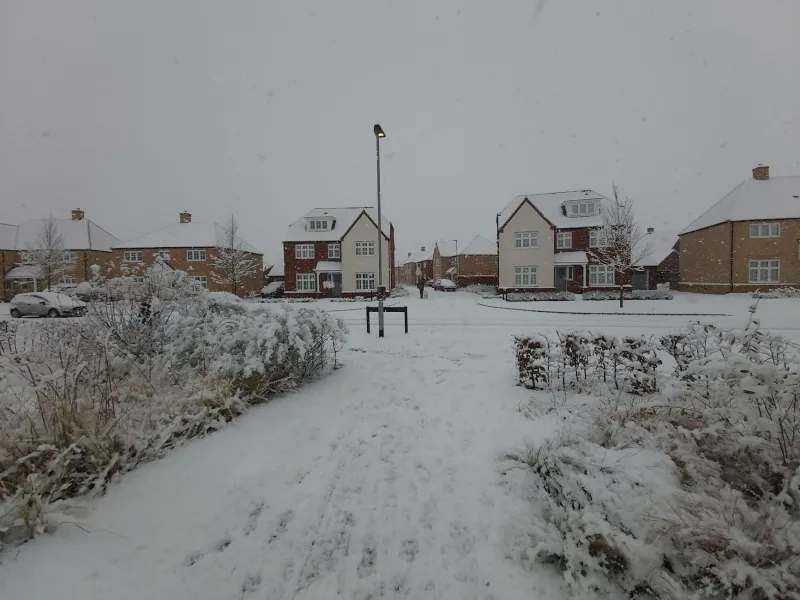
At eight o'clock on a damp November evening, a row of front doors opens almost in sequence. Nobody has texted. Nobody has knocked. A woman in a fleece waves from her step, a teenager lifts a hand from behind a curtain, and an older man gives a slow, deliberate salute from his porch. Thirty seconds later, the doors close again.
It is not a flash mob. It is not a TikTok trend. It is simply the 8pm wave, a small nightly ritual on one suburban road that has outlasted the thing that started it.
The idea began in spring 2020, when seeing a neighbour's face was suddenly the highlight of the day. Back then, the wave was a way of saying "still here" without breaking the rules. Six years on, the rules are long gone, but the habit has stayed. And the people who keep it going say it has become something far more useful than a lockdown souvenir.
The Early-Warning System Nobody Planned
"You can tell a lot from a wave," says Pauline, who has lived on the road for thirty-one years and is, by common agreement, the person who knows everyone's business without ever seeming nosy. "If someone's usually out there and suddenly they're not, you notice. If their wave is a bit slower, you notice that too."
That noticing has mattered. Last winter, a neighbour who lives alone missed three evenings in a row. On the fourth, Pauline walked over with a tin of soup and found him struggling with a chest infection and a phone he couldn't work out how to charge. He was fine after a trip to the GP and a bit of help, but the wave had done its job before anyone had to make a fuss.
Another household used the ritual as a gentle way to announce a new baby. For the first two weeks, the blinds stayed down and the waving stopped. Then one evening, a very tired dad appeared at the door with a tiny hand in his and a thumbs-up. Half the road waved back. Nobody expected a conversation. Nobody asked how the birth had gone. The message was simply: we're still here, we're exhausted, we'll see you soon.
Not a Club, Not a Committee
What makes the 8pm wave work, its fans say, is that it asks almost nothing of anyone. There is no rota, no WhatsApp group with 47 unread messages, no treasurer and no minutes. You do not have to bring a chair. You do not have to stay for a brew if you haven't got the energy. You just have to open the door and lift a hand.
That low bar is the point. "So many community things sound lovely but they want your Tuesday evening," says Sam, who moved onto the road three years ago and admits he was sceptical at first. "This is thirty seconds. I can do thirty seconds even when I'm knackered, even when I'm grumpy, even when I've got a toddler hanging off my leg."
It has also proved useful for the people who would never describe themselves as lonely. The retired teacher who insists she's perfectly happy with her books. The night-shift worker who sleeps odd hours. The man who moved in after a divorce and didn't know anyone's name for six months. None of them wanted a befriending scheme. But all of them, it turns out, quite like knowing that someone will notice if the curtains stay shut.
The Winter Test
Rituals like this face their real test in November and December, when it is dark by teatime and the temptation to hibernate is strong. The road has a simple answer: the wave carries on regardless of weather. If it's raining, people wave from behind glass. If someone is away, they tell a neighbour. If someone is ill, the wave becomes a check-in.
There is no formal rule about what happens if you miss a night. That would ruin it. But there is an understanding. Miss one, and nobody minds. Miss three, and someone will pop round with a vague excuse about having too many sprouts or needing to return a ladder.
"It's not surveillance," Pauline says firmly. "It's just being neighbourly. There's a difference. One is nosy. The other is kind."
Could Your Road Do It?
Starting an 8pm wave is not complicated. Pick a time that suits most people — after the soaps, before the late film, whenever the street is usually quiet. Mention it to one or two neighbours. Put a note through a few doors, or bring it up at the bus stop. Then, for a week, just do it. No sign-up sheet. No pressure. The people who want to join in will join in, and the people who don't will not be asked twice.
The only real requirement is consistency. A wave that happens once is a novelty. A wave that happens every night becomes a habit, and a habit becomes a way of keeping an eye out without anyone feeling watched.
On the road where it has been happening since 2020, the ritual has become as ordinary as putting the bins out. Doors open. Hands lift. Someone shouts "night!" into the cold air. Then the street settles down for the evening, each house quietly aware of the others.
It is not a solution to loneliness, or illness, or the cost of living, or any of the big things that keep people awake. But it is thirty seconds of proof that somebody would notice if you weren't there. And this winter, that might be worth more than a group chat full of unanswered messages.