Two Wheels, No Judgement: The Saturday Class Where Grown-Ups Finally Learn to Ride
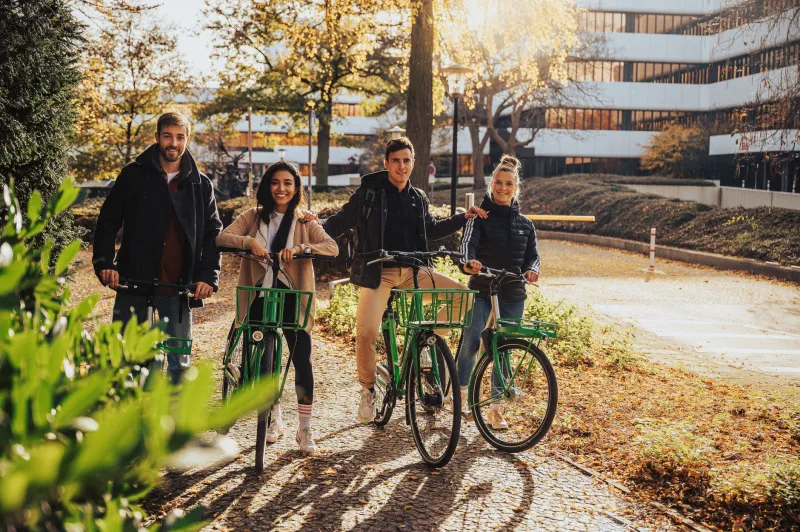
The shed smells of oil, rubber and the faintly sweet dust of old inner tubes. It is not a glamorous building — a lean-to behind a community centre, really, with a corrugated roof that drums in the rain and a hand-painted sign that has been touched up so many times the letters look slightly swollen. But inside, arranged in neat rows like books on a shelf, are around forty bicycles. Some are rusty shoppers with baskets that creak. Some are rescued road bikes, their frames polished back to something like their former glory. A few are tiny children's cycles waiting for their next owner.
This is the bike library. You can borrow a bicycle here for nothing — no deposit, no forms in triplicate, just a name and a promise to bring it back. And on Saturday mornings, while the rest of the town is still deciding whether to risk the weather, a very specific kind of lesson takes place at the back of the car park: adults learning to ride.
'I thought I'd missed my chance'
You might assume everyone learns to ride as a child. Most people do. But not all. Some grew up in flats with nowhere to store a bike, or in families where a bicycle was simply never on the list. Others had a bad fall decades ago and quietly decided that was that. A few arrived in the UK as adults and never had the chance to learn. The reasons are as varied as the people who turn up, but the feeling is often the same: a small, private sense that everyone else got a memo they missed.
Take the woman in her late fifties who turned up on a bright morning in September, wearing a coat she clearly didn't want to scuff. She hadn't ridden since she was nine. She'd spent the week before watching videos online and had convinced herself she'd be the only one who couldn't do it. Twenty minutes later, she was wobbling the length of the car park with a volunteer jogging alongside, one hand hovering near the saddle, and a small crowd of strangers clapping as if she'd just finished the Tour de France.
That's the thing about this place. It doesn't do irony. The cheering is genuine. The flasks come out. Somebody's nan brings a tin of biscuits. It is, in the most ordinary way, a little bit magical.
A shed full of second chances
The bicycles themselves have stories. Most are donations — bikes that have been sitting in garages for years, chains seized, tyres flat, owners finally admitting they're never going to use them. Volunteers strip them down, replace what needs replacing, and give them a second life. A rescued road bike might go to a teenager who can't afford one. A sturdy shopper with a basket might end up with an older person who wants to pop to the shops without waiting for the bus. And a small, steady hybrid might become the bike that finally teaches a grown adult to balance.
There's a quiet economy to it. Nothing is sold. Nothing is advertised. Word gets round the way it always does in a town: through the GP surgery noticeboard, through the school gate, through the woman at the library who knows everyone. People bring bikes. People borrow bikes. People learn to ride them. The shed just keeps doing what it does.
The cheering squad
What makes the Saturday lessons work isn't really the bicycles. It's the people standing at the edge of the car park with steaming mugs, shouting encouragement at complete strangers.
They're not instructors, mostly. One is a retired teacher who cycles everywhere and has the calves to prove it. Another is a dad in his thirties who learned to ride at four and genuinely cannot remember not being able to. There's a teenager who volunteers because it looks good on a university application, and stayed because he discovered he's actually quite good at it. The lessons are free, informal and entirely dependent on someone being willing to give up their Saturday morning.
And they do. Week after week. In the drizzle, in the cold, in the kind of grey November light that makes everything look slightly unfinished. They hold the backs of saddles, run alongside wobbling learners, and say 'you've got it' at exactly the right moment. They also know when to let go — which is, frankly, the hardest part.
Independence, at walking pace
The reasons people want to learn are rarely about fitness. They're about independence. One woman wanted to cycle to her part-time job instead of paying for two buses. A man in his forties wanted to ride alongside his kids without feeling like the odd one out. Someone else just wanted to know they could, before they got any older.
There's a dignity in that which is easy to overlook. Learning something new as an adult is exposing. You are bad at it, visibly, in public. But the bike library has somehow created a space where being bad at something is not just tolerated but expected. Nobody laughs. Nobody films. The cheering squad is there for everyone, whether you ride ten metres or ten laps.
And then there's the moment — and it happens most weeks — when someone realises they're doing it. The volunteer has let go. The bike is moving. The learner is pedalling, wobbly but upright, and the look on their face is somewhere between terror and delight. The cheering gets louder. Someone's flask gets raised. And for a few seconds, a car park in a small town feels like the best place in Britain.
How to find your nearest
The bike library isn't a national scheme, and that's part of its charm. It's the sort of thing that exists because a handful of people decided their town needed it. If you're curious, start with your local community centre, library or cycling group. Ask on the street WhatsApp group. Check the noticeboard by the post office — the one that still knows everyone's business. Somewhere near you, there is probably a shed full of spare bikes and someone willing to teach you how to ride one.
And if you already can? Consider donating that bike in the back of the garage. Consider volunteering on a Saturday. Consider standing at the edge of a car park with a flask, clapping for a stranger who is quietly terrified and about to discover something brilliant about themselves. It turns out a shed full of spare wheels can do quite a lot for a town — and for the grown-ups who finally get their turn.