The Best Seats in Town Are Folding Ones: Why Christmas Lights Night Still Wins
There is a particular sound that tells you Christmas lights night has begun. It is not a orchestra, or a celebrity countdown, or a slick recorded voiceover. It is the clatter of a primary school choir trying to arrange itself on temporary staging while someone tests a microphone by saying, “Can you hear me at the back?”
And honestly? It is the best free show in town.
Across the UK in 2026, towns and villages are preparing for that familiar ritual: the ladder, the timer switch, the slightly wonky star, the crowd in coats and scarves, and the moment the high street goes from ordinary to briefly magical. It is not polished. It is not meant to be. That is exactly why it matters.
The bit before the countdown
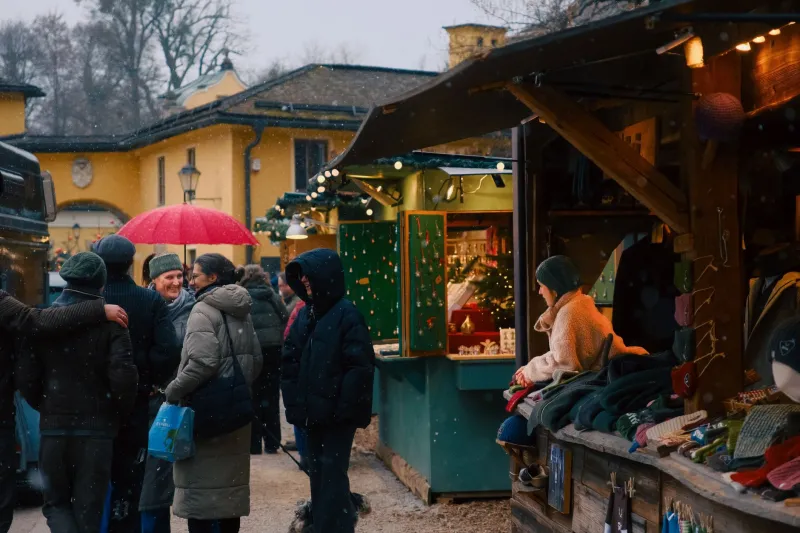
Christmas lights switch-ons have a wonderful way of making a high street feel like a living room. People arrive early because they know parking will be a nightmare. They bump into neighbours they have not seen since the summer. Someone’s child is dressed as a shepherd and refusing to wear the headdress. Someone else has brought a flask and is quietly offering cups around.
This is the unscripted part of the festive calendar, and it is worth protecting. In an age when so much of Christmas is bought, streamed, booked or delivered, the switch-on remains stubbornly local. You cannot order it online. You cannot get it on next-day delivery. You have to turn up, stand near the war memorial or the market cross, and wait with everyone else.
A star that leans, a choir that shines
The school choir is usually the heart of it. They may be slightly out of time with the backing track. One child will wave at a parent mid-verse. Another will perform with the intensity of someone auditioning for a West End role. The audience will not mind a bit. If anything, the wobbles make it better.
Then there is the star. Sometimes it is a proper illuminated star. Sometimes it is a homemade effort that leans a few degrees to the left, as if it has had a long day. Either way, it becomes the focal point. People point at it. Small children are lifted onto shoulders to see it. Someone says, “Oh, that’s lovely,” and means it.
The switch itself is often delightfully low-tech. A volunteer with a ladder, a quick check that the extension lead is still where it should be, and a countdown led by someone from the local round table or parish council. The lights flicker on. The crowd cheers. Someone’s dog barks. It is over in seconds, and yet it is the whole point.
Why the shopping centre cannot compete
Big shopping centres do Christmas very well. They have the budget, the fake snow, the giant baubles and the queue-management systems. But they cannot offer the same thing as a local switch-on: the feeling that you are part of the place rather than a visitor to it.
At a shopping centre, you are a customer. At your local switch-on, you are a neighbour. You might be the person who knows which shopkeeper donated the raffle prize. You might be the parent who helped paint the cardboard reindeer. You might simply be the person who brought a folding chair and ended up holding someone else’s toddler while they took a photo.
That is not a small thing. These nights are one of the last great unscripted community events on the calendar. They do not need a ticket. They do not need a dress code. They just need enough people to make the high street feel alive.
The people holding the ladder
It is worth saying plainly: none of this happens by magic. Behind every switch-on is a small group of volunteers who have been thinking about it since September. They have chased permissions, tested bulbs, booked the choir, borrowed a generator, printed the posters and worried about the weather forecast.
They are not doing it for glory. Most of them would rather be at home with the kettle on. They do it because they know what a difference a few hundred people gathered in the cold can make to a town’s sense of itself.
So if you see the person with the clipboard looking slightly frazzled, say thank you. If you can spare an hour to help set up chairs or hand out mince pies, offer. If you cannot volunteer, just show up. A crowd is not a crowd without people in it.
Bring a chair, bring a neighbour
This year, the festive season will be full of expensive options. There will be light trails with booking fees, winter wonderlands with timed slots and menus that require a deposit. All fine, if that is your thing. But do not let the polished stuff crowd out the free stuff.
Check when your local switch-on is happening. It will probably be on a Friday or a weekend afternoon between now and mid-December, advertised on a lamp post, a church noticeboard, a Facebook group or a poster in the post office window. Put it in the diary. Tell a neighbour. Bring a chair if you have one, and a spare blanket if you are kind.
And when the countdown starts, join in. Even if you feel a bit silly. Especially if you feel a bit silly.
Your town needs you to show up
The Christmas lights switch-on is not the flashiest event of the year. It will not trend online. The star may lean. The choir may be drowned out by a passing bus. Someone will forget to unmute the microphone. And it will still be one of the best nights of the season.
Because it is ours. It belongs to the people who stand in the cold, the volunteers who hold the ladder and the children who wave from the stage. It is a reminder that community is not something you buy. It is something you turn up for.
So bring a chair. Bring the kids. Bring a neighbour who does not get out much. The lights will go on either way, but they will shine a little brighter with you there.