The Repair Café Where 'I'll Just Buy a New One' Gets a Very Polite Pushback
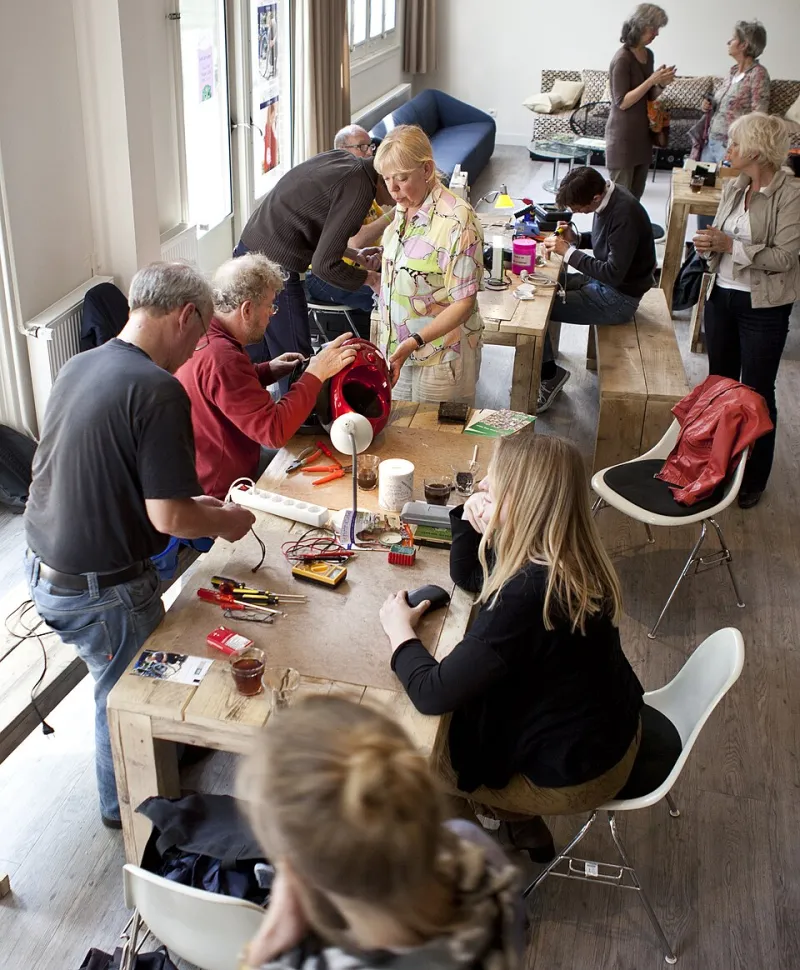
Photo: Ilvy Njiokiktjien, CC BY-SA 3.0, via Wikimedia Commons
At 10am on the third Saturday of the month, the village hall in Marsh Gibbon smells of tea, dust and a faint electrical burning that everyone is politely ignoring. On a trestle table near the door, a man called Colin is holding a toaster like a patient. Beside him, a woman is reattaching a button to a coat that has been in her family since the 1990s. By 11, there are six people waiting, four mugs on the go and a small child who has been promised a biscuit if he stops asking whether the lamp will explode.
This is a repair café. Not a shop, not a charity, not a council service, though it has bits of all three about it. It is a room full of volunteers who know how to fix things, and people who have brought things they would otherwise have thrown away. The deal is simple: you bring your broken item, you have a cup of tea, and someone has a look at it with you. No guarantee. No charge. No lecture.
The Queue Starts With a Kettle
The first item through the door is usually a kettle. Then a lamp, a hoover, a pair of trousers with a split seam, a radio that only works if you hold the aerial, a child's toy with a missing wheel. Colin, a retired electrician, says he sees the same faults again and again. “Nine times out of ten it's a fuse, a loose wire or a bit of limescale,” he says. “People think it's the end of the world. It's usually twenty minutes and a new plug.”
He is careful to add that not everything should be fixed. Microwaves can be risky. Anything with a damaged cable gets a stern look. Anything that needs a part will be sent away with advice. The repair café is not a replacement for a qualified electrician, and the volunteers are not there to take over your kitchen. But for the small stuff, the everyday stuff, they can often help.
What Actually Gets Fixed
There is a rhythm to the morning. Someone arrives with a broken thing and a story. The story is often the best bit. A lamp that belonged to a grandmother. A coat bought for a first job. A radio that was a wedding present. A toy that a child has loved almost to death. The volunteers listen, have a look, and then either fix it or explain why it cannot be fixed. Either way, the person usually stays for a cup of tea.
“I came in with a toaster,” says a woman called Helen, who is now on her second biscuit. “I've been meaning to buy a new one for months. But I thought I'd give this a go. And now Colin's showing me how to clean the crumb tray, and I feel slightly ridiculous for ever thinking I needed to spend forty quid.”
That is the quiet magic of the repair café. It is not just about saving money, though it is that. It is not just about reducing waste, though it is that too. It is about the moment when a thing stops being rubbish and becomes a thing again. A thing with a story. A thing you might keep.
Why It's a Shopping Story, Not Just a Recycling Story
It would be easy to file repair cafés under “green” and move on. But they are also part of the local shopping picture. Every toaster fixed is a toaster not bought from a warehouse. Every coat mended is a coat not replaced on the high street or online. Every lamp rewired is a small vote against the idea that the only answer is new.
That does not mean repair cafés are anti-shop. They are often the opposite. They send people to local hardware stores for fuses, plugs and sewing thread. They point people towards independent repairers when a job is too big. They keep money in the community in a small, steady way. And they make the case that the high street is not just a place to buy things; it is a place to get things mended, too.
There is also the practical matter of cost. A new kettle can cost anywhere from £20 to £80. A new coat can cost £60 or £200. A new lamp can cost whatever the internet says it should. In a year when everything seems to have gone up, a free repair session is not a niche hobby. It is a small piece of financial breathing space.
How to Find Your Nearest Session
The simplest place to start is online. Search for “repair café near me” plus your town or village, and you will usually find a listing, a Facebook page or a calendar of sessions. Community noticeboards are still surprisingly good, too, especially in village halls, libraries and the sort of post offices that have a stack of leaflets by the door. Your local council's recycling team may know what is running in the area. So might a local church, WI or Men's Shed group.
When you find one, check what they can and cannot fix before you load up the car. Most repair cafés cannot help with microwaves, anything that needs a gas safe engineer, or items that are still under warranty. Some have specific sessions for electricals, clothing, bikes or furniture. It is worth reading the small print and, if in doubt, sending a message with a photo.
And if you do not have one nearby? That is where the next bit comes in.
How to Start One in Your Village Hall
Starting a repair café is not complicated, but it is not nothing. You need a venue with enough tables, chairs and power sockets. You need a small group of volunteers who between them know their way around a fuse, a sewing machine, a bike chain and a cup of tea. You need insurance, a risk assessment and a clear policy on what you will and will not touch. You need someone to make the tea, which is arguably the most important job of all.
The wider Repair Café movement has plenty of free guidance online, including how to run a session safely and how to recruit volunteers. Your village hall committee will probably be delighted to have a Saturday booking. A local hardware store might donate fuses and plugs. A library might lend you a table. The first session might be four people and a broken lamp. That is fine. Most things start small.
What you do not need is a perfect plan. You need a date, a room, a few signs and the willingness to say, “We'll have a look, but no promises.” The rest tends to follow.
The Bit Nobody Puts on the Poster
The repair café does not just fix toasters. It fixes the idea that everything is disposable. It gives people permission to ask for help, which is not always easy. It gives volunteers a reason to pass on what they know, which is a quiet kind of value that never shows up on a spreadsheet. And it gives a village hall a Saturday morning that feels like a village hall should: busy, slightly chaotic, and full of tea.
Back in Marsh Gibbon, Colin has fixed the toaster. Helen is thrilled. The child has had his biscuit. The lamp is still being looked at, but the mood is optimistic. Outside, it is raining. Inside, someone is putting the kettle on again.
“People say they haven't got time to mend things,” Colin says. “But they've got time to buy new ones. That's the funny thing. You make time for what you value.”
The next session is on the third Saturday of the month. Bring something broken. Bring a friend. Bring a biscuit if you like. Just do not bring a microwave.